Community First
The programme responds to genuine local need.

SwimTayka Training & Learning
Volunteer Costs, Ethics, Safeguarding and Local Sustainability
International volunteering raises important questions about ethics, costs, safeguarding and the role of overseas volunteers. This training explains how SwimTayka approaches those questions openly, responsibly and with the needs of local communities at the centre of every programme.
Start here
Join Sarah, SwimTayka’s Training Educator, as she explains our approach to responsible international volunteering and how we communicate it clearly to prospective volunteers.
Approximate training time: 20 minutes
Our shared foundation
The programme exists for the community, not for the volunteer.
The needs of the children, local organisation and long-term drowning-prevention outcomes must always come before the experience of somebody travelling from overseas.
The programme responds to genuine local need.
Swimming and water-safety education exist to reduce drowning risk.
Our long-term aim is stronger locally led and sustainable programmes.
About the training
Questions about international volunteering are reasonable. Prospective volunteers may want to understand why they are expected to fundraise, what their money supports, why international volunteers are required and whether volunteering can create dependency.
SwimTayka wants staff and volunteers to feel comfortable discussing these questions openly rather than becoming defensive.
Learning outcomes
By the end of this training, you’ll be equipped to explain our model with confidence, care and transparency.
Understand how SwimTayka avoids putting the volunteer experience ahead of community needs.
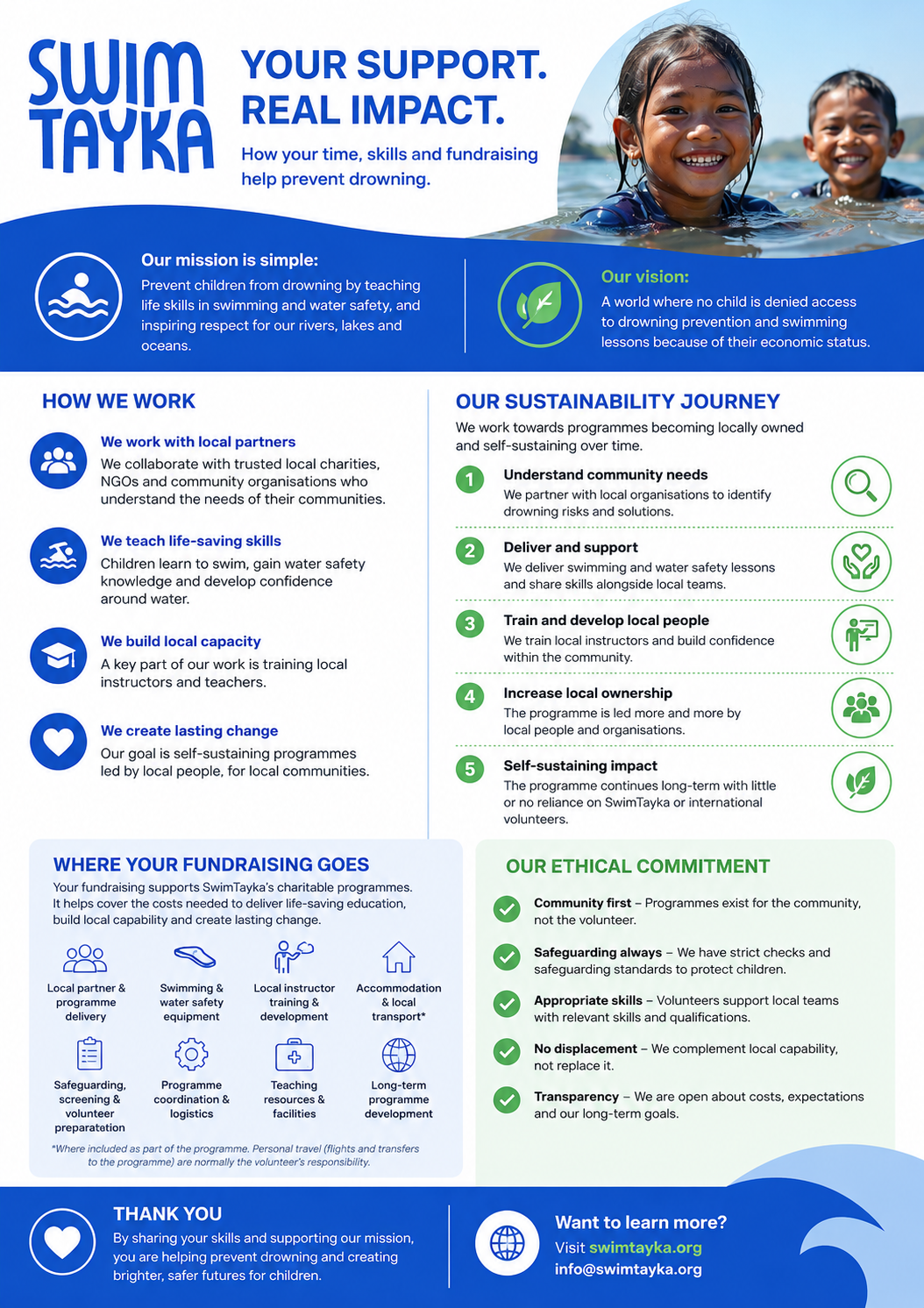
Understand the difference between charitable fundraising and personal volunteer expenses.
Explain why programmes begin with established local organisations and genuine community needs.
Understand why fundraising or payment never overrides safeguarding requirements.
Explain how volunteers support local teams rather than replace them.
Understand why training local swimming teachers and instructors is central to our model.
Explain how programmes move towards increasing local ownership and reduced reliance on overseas volunteers.
Learn how to answer difficult questions accurately without guessing or becoming defensive.
A long-term model
Every programme follows the community’s context—not a fixed volunteer itinerary.
Work with established local organisations to identify drowning risks and programme needs.
Help provide swimming and water-safety education alongside local teams.
Develop swimming teachers, instructors and local water-safety capability.
Local people and partner organisations take increasing responsibility for programme delivery.
The programme continues with increasingly less reliance on SwimTayka and international volunteers.
Our success is not measured simply by how many international volunteers we send. It is measured by how strong and sustainable the local programme becomes.
Clear and accountable
Fundraising supports SwimTayka’s charitable work, programme delivery, local partners, training, resources, safeguarding and long-term development.
Volunteers are normally responsible for personal expenses such as flights, transfers, insurance, visas, vaccinations, personal spending and independent travel.
Ethics in practice
A responsible volunteer joins an existing community effort with humility and respect.
A better conversation
If someone says the programme feels like humanitarian tourism, our first response should not be to defend SwimTayka.
“Which part of the programme gave you that impression?”
They may be concerned about:
“How could we explain our model better?”
Difficult questions can expose gaps in our communication. If one prospective volunteer misunderstands something, others may misunderstand it too. Their feedback helps us improve.
Before speaking to a volunteer
Staff should be able to answer each question clearly and accurately.
If we cannot answer these questions internally, we should resolve them before asking a volunteer to commit.

Your Training Educator
SwimTayka Training Educator
Sarah guides SwimTayka’s training and learning sessions, helping make important information clear, practical and easy to understand.
Reference guide
Keep this guide available when speaking with prospective volunteers. It provides a quick reminder of how to explain SwimTayka’s approach, costs and ethical principles clearly and consistently.
The key takeaway
Volunteers support the mission — the mission does not exist to support the volunteer experience.
Complete
Thank you for taking the time to complete this SwimTayka training. The way we explain our programmes matters. Clear, respectful and transparent conversations help volunteers understand their responsibilities and help us attract people who genuinely support our mission.